
How to find leads for real estate isn’t just a question: it’s the daily challenge that defines your success as an agent.
Whether you’re chasing your first listing or scaling a growing portfolio, one thing never changes: no leads, no business.
But it’s easy to feel overwhelmed by the sheer number of strategies out there.
What actually works?
This guide cuts through the noise to show you lead generation strategies for real estate agents using methods that are both proven and scalable.
We’ll walk you through:
- 8 Common Real Estate Lead Generation Strategies
- 5 Tools to Enhance Real Estate Lead Generation
- Real Estate Lead Generation Defined
- How to Choose the Best Lead Generation Methods for You
- How to Implement and Optimize Your Lead Generation Efforts
It’s time to stop guessing and start building a repeatable pipeline that grows with you.
Ready to generate better leads, faster?
Let’s dive in.
8 Common Real Estate Lead Generation Strategies
Successful real estate agents employ a variety of methods to attract potential clients. Understanding each strategy is the first step toward implementation.
- Cold Outreach via LinkedIn and Email
- Online Presence and Digital Marketing
- Networking and Referrals
- Open Houses and Events
- Direct Mail and Print Advertising
- Cold Calling and Door Knocking
- Geographic Farming
- Social Media Engagement
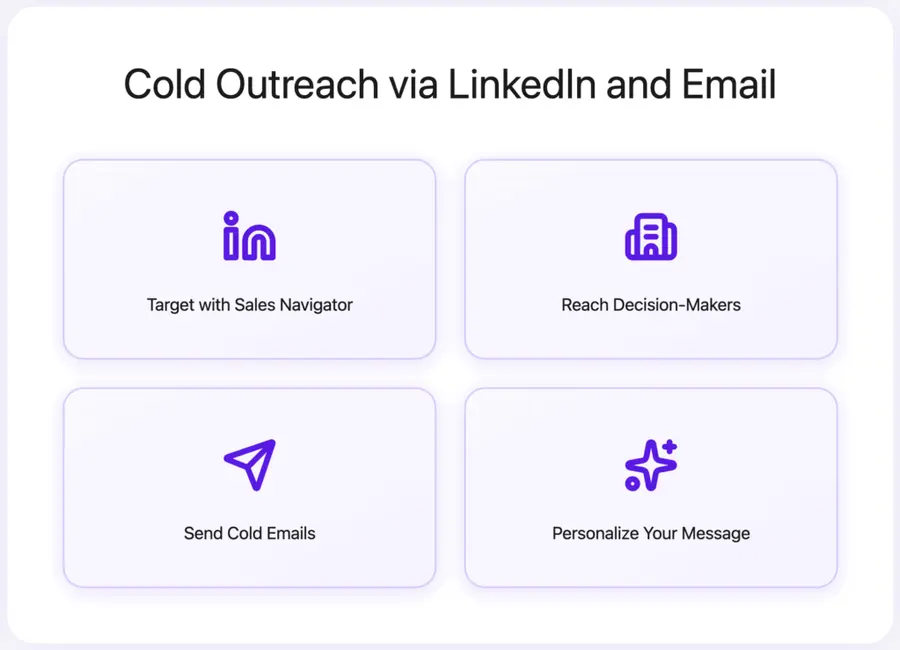
1. Cold Outreach via LinkedIn and Email
Cold outreach is still one of the most effective ways to connect with high-intent leads that most real estate agents overlook.
Platforms like LinkedIn allow you to identify and engage with investors, corporate decision-makers, and B2B clients who are actively seeking properties for investment, relocation, or expansion.
If you’re ready to invest some money in a powerful tool, you can even create hyper-targeted lead lists on Sales Navigator, based on filters like location, job title or industry.
Examples:
- CEOs relocating their companies to a new city
- Startup founders looking for commercial space after a funding round
- Private investors interested in multi-family or rental properties
Once identified, these leads can be reached with personalized cold emails or LinkedIn messages that speak directly to their needs.
And instead of manually copying leads from LinkedIn, tools like Evaboot help you export LinkedIn Sales Navigator lead lists in one click — removing irrelevant profiles and exporting qualified contacts instantly.
Pair this with a cold email software like Lemlist or Instantly, and you’ve got a scalable system to generate off-market opportunities without relying on paid ads.
2. Online Presence and Digital Marketing
In real estate, your online presence is often your first impression. And it directly impacts your ability to attract inbound leads.
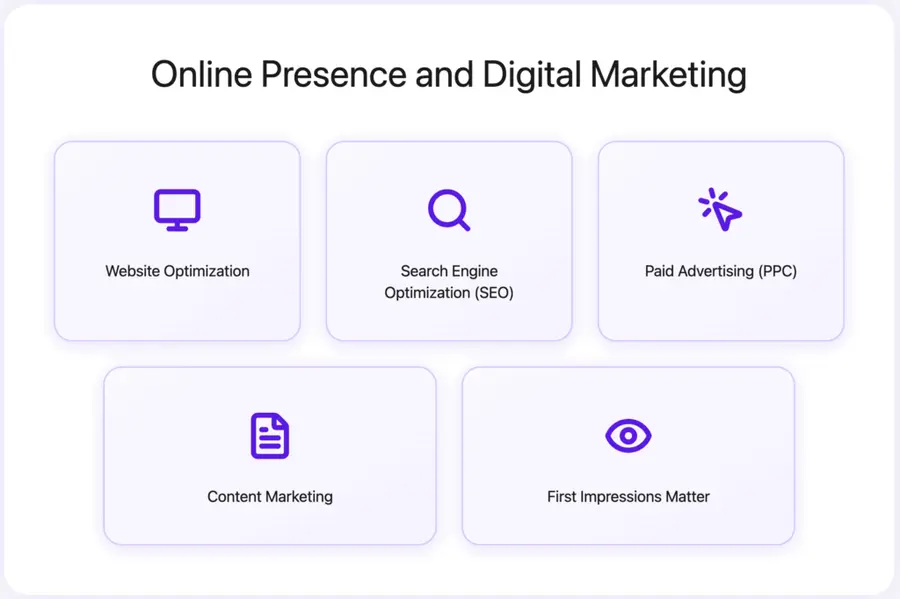
- Website Optimization: Ensure your website is professional, mobile-friendly, and easy to navigate. Include clear calls to action.
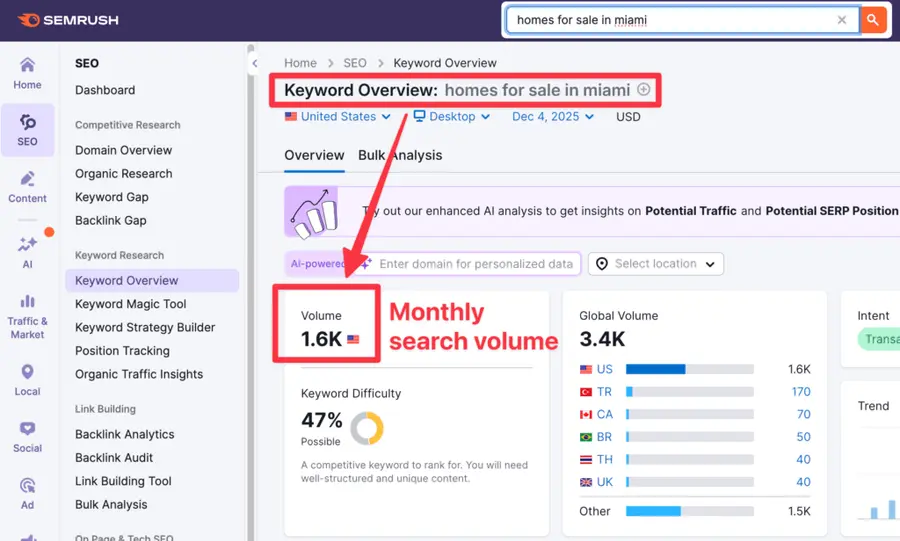
- Search Engine Optimization (SEO): Optimize your website content with keywords your potential clients are searching for to rank higher in search engine results.
- Paid Advertising (PPC): Use platforms like Google Ads to target specific demographics and locations with highly visible advertisements. This drives immediate traffic.
- Content Marketing: Create valuable content such as market updates, listing walkthroughs, and area guides. This positions you as an expert and attracts informed leads.
3. Networking and Referrals
Your personal network is one of the most underrated lead sources in real estate — especially if you’re just starting out or working within a tight budget.
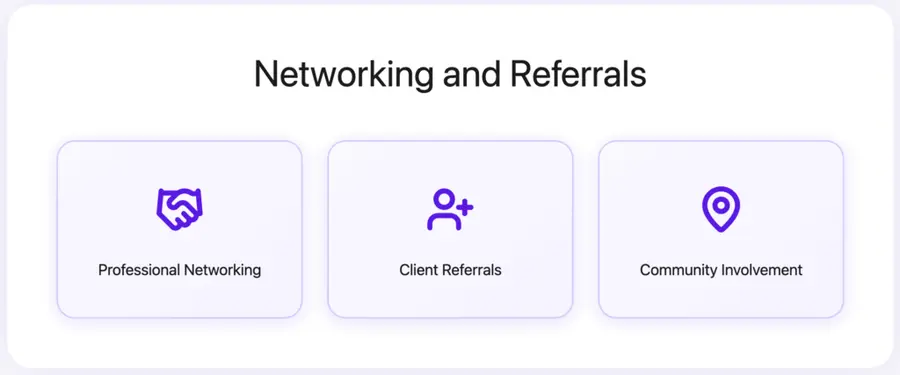
- Professional Networking: Attend industry events, join local business associations, and connect with other professionals like lenders, inspectors, and contractors.
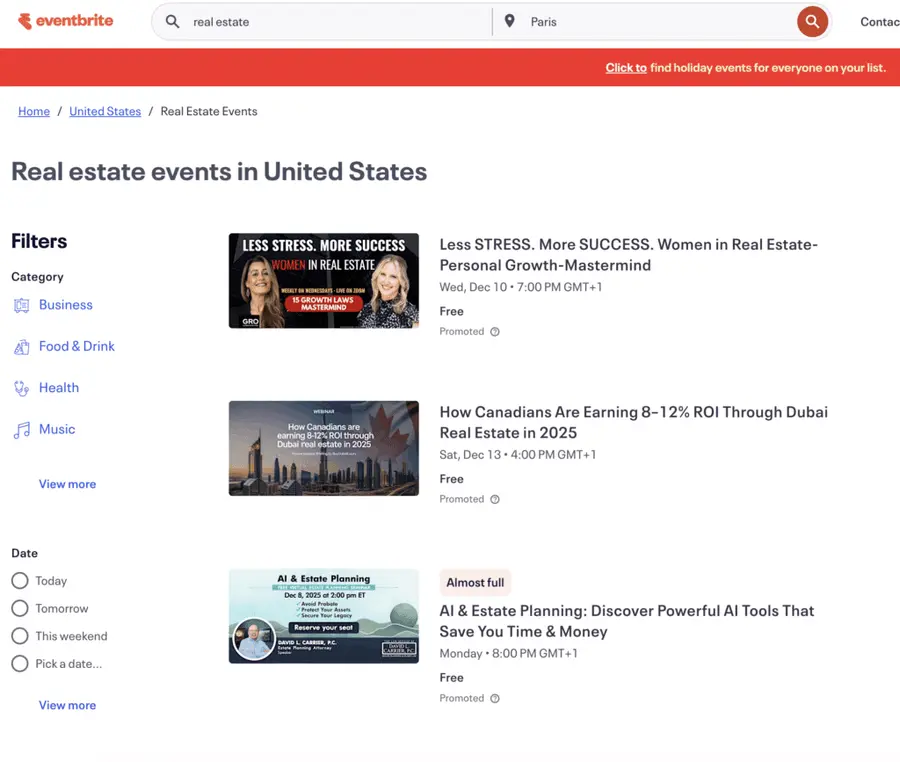
- Client Referrals: Actively request referrals from past satisfied clients. Offer incentives for successful introductions. Here’s a referral message you can send to past clients (manually or via CRM):
Hi [First Name],
I hope you’re doing well and enjoying your new home!
I wanted to ask a quick favor — if you know anyone looking to buy, sell, or invest in real estate, I’d be grateful for an introduction. Most of my clients come from referrals, and I always prioritize people recommended by past clients.
Thanks so much in advance!
- Community Involvement: Participate in local events, sponsor teams, or volunteer for causes. This builds goodwill and visibility within your community.
4. Open Houses and Events
Open houses aren’t just for showcasing a listing, they’re a lead capture opportunity if done right. Face-to-face interaction builds rapport faster than any ad.
- Organize Local Seminars: Host events on topics like “First-Time Homebuying” or “Real Estate Investment.” This positions you as an authority.
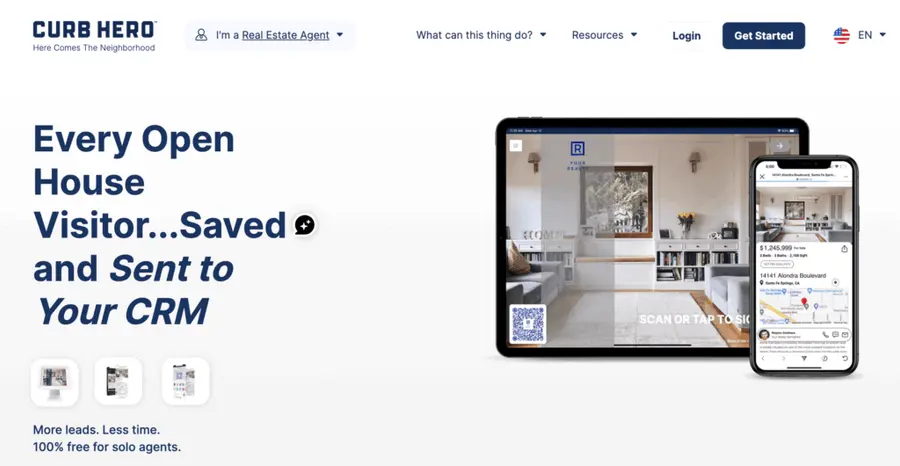
- Host Open Houses: Prepare properties meticulously and actively engage with visitors. Use tools like Curb Hero to digitize your open house sign-ins and automatically sync leads to your CRM.
- Neighborhood Events: Sponsor or participate in local fairs or festivals. Set up a booth to distribute information and collect leads.
5. Direct Mail and Print Advertising
Print isn’t dead. It just needs to be hyper-targeted and paired with a strong CTA.
- Targeted Postcards: Send postcards to specific neighborhoods announcing new listings, recent sales, or market updates.
- Local Publications: Place advertisements in community newspapers or magazines. This reaches a localized audience.
- Brochures and Flyers: Distribute informative materials in high-traffic areas or at your open houses.
6. Cold Calling and Door Knocking
Door knocking and cold calling still work,but only if you’re strategic and consistent.
- Cold Calling: Contact potential clients directly via phone. Focus on specific areas or expired listings.
- Door Knocking: Go door-to-door in target neighborhoods. Introduce yourself and offer assistance.
- Expired Listings: Reach out to owners of properties that failed to sell. Offer new strategies.
7. Geographic Farming
Instead of working randomly, pick a farm area or property type and learn it inside-out. Residents are more open to speaking with agents who clearly know the neighborhood.
- Define Your Farm Area: Choose a neighborhood or community where you want to become the dominant agent.
- Consistent Outreach: Regularly send mailers, host events, and engage with residents in your chosen area.
- Become the Local Expert: Understand the market dynamics, property values, and community features of your farm area.
8. Social Media Engagement
Social media isn’t just for branding, it’s a real channel for attracting and converting leads, when done with intent.
- Platform Selection: Focus on platforms where your target audience is most active. Facebook and Instagram are great for residential buyers and sellers, while LinkedIn works best for investors and B2B leads.
- Consistent Posting: Share listings, market insights, community news, and engaging content.
- Paid Social Ads: Use targeted advertising options to reach specific demographics with precision.
- Engage with Followers: Respond to comments and messages promptly. Build relationships.
5 Tools to Enhance Real Estate Lead Generation
Technology significantly amplifies your lead generation capabilities. Integrate these tools to streamline your processes:
- Evaboot’s Sales Navigator URL Generator
- CRM Software
- Social Media Management Tools
- Email Marketing Platforms
- Website Analytics
- Lead Capture Forms
1. Evaboot’s Sales Navigator URL Generator
Struggling to find high-quality real estate leads on LinkedIn?
Instead of wasting time with complex filters inside Sales Navigator, let AI do the work for you.
Evaboot’s Sales Navigator URL Generator lets you describe the leads you’re looking for in plain English, and it instantly turns that into a ready-to-use search URL.
- No more guessing with LinkedIn Sales Navigator search filters
- Instantly generate hyper-targeted searches
- Perfect for agents targeting investors, founders, or B2B buyers
For example, here’s a pre-built search for:
“Real estate investors in Miami who are founders or CEOs of small companies”
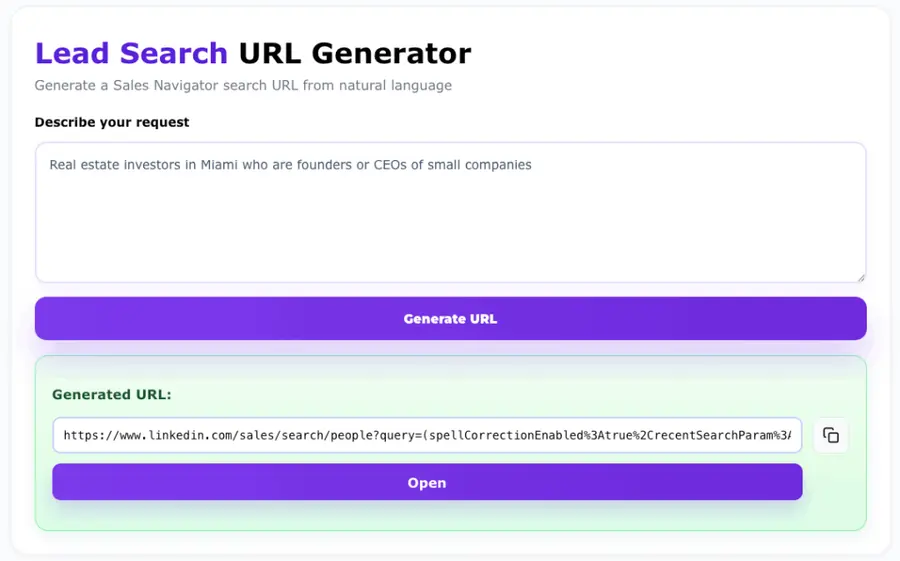
➔ Click here to see the live Sales Navigator search URL.
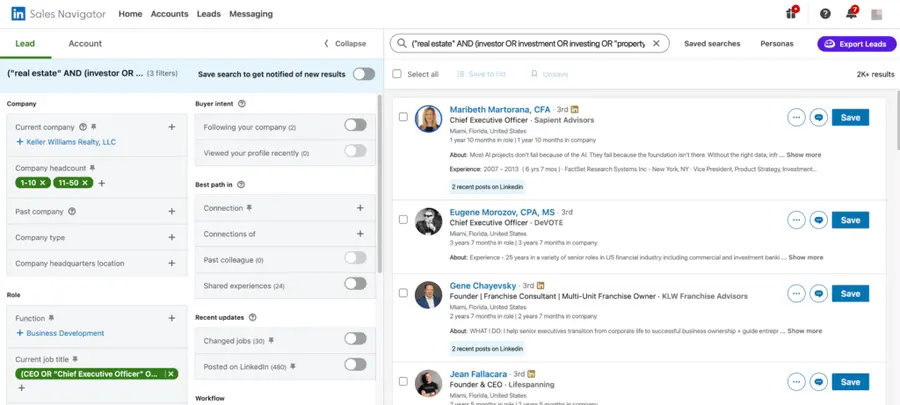
Once the leads are surfaced, you can export them with the Evaboot Chrome extension and get a CSV with clean data and verified professional emails.
It’s the fastest way to go from “I need leads” to “Here’s my prospect list” — without touching a single filter.
2. CRM Software
A CRM (Customer Relationship Management) tool keeps your pipeline clean, your follow-up consistent, and your leads warm — even when you’re juggling 10 deals at once.
Here’s why it matters for real estate agents:
- Track every lead, from first contact to closing
- Set reminders so no conversation slips through the cracks
- Automatically log emails, calls, and notes for each contact
Whether you’re working solo or managing a team, a CRM is your daily command center.
Best tools:
- Follow Up Boss — built for real estate workflows
- Lone Wolf — affordable, easy-to-use for solo agents
- HubSpot — great for those combining marketing + sales
3. Social Media Management Tools
If you want your social media to actually generate leads, you need to show up consistently, even when you’re busy showing homes.

Social media management tools let you batch your content, schedule posts in advance, and track what’s working.
Here’s why it matters for real estate agents:
- Never forget to post your new listing or open house
- Stay active on multiple platforms without logging in daily
- Quickly spot which content drives the most engagement
Best tools:
- Buffer – simple UI, perfect for solo agents
- Later – drag-and-drop scheduler with Instagram focus
- Hootsuite – robust platform for managing multiple accounts
4. Email Marketing Platforms
Many real estate leads take months to convert. A well-timed email sequence keeps you top-of-mind without being pushy.
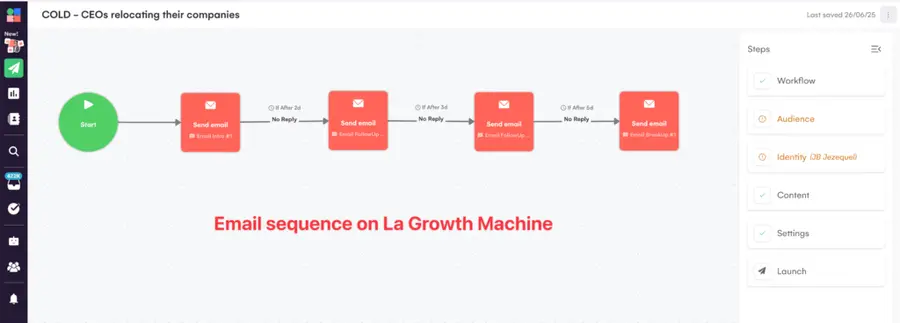
Here’s why it matters for real estate agents:
- Set up drip campaigns for new leads, buyers, and past clients
- Send neighborhood updates, market reports, or tips
- Personalize messages based on location or interest
Best tools:
- La Growth Machine – ideal for multichannel outreach.
- Mailchimp – great for beginners with visual email builder
- ActiveCampaign – advanced automation and segmentation
5. Website Analytics
Your website is a 24/7 lead gen machine — if you know how to read the data.
Website analytics tools tell you who’s visiting, where they’re coming from, and which pages convert best.
Here’s why it matters for real estate agents:
- Know which listings or guides are getting traffic
- See if your SEO or ads are driving results
- Find drop-off points and fix friction in your funnel
Best tools:
- Google Analytics 4 (GA4) — free and powerful once set up correctly
- Pair it with tools like Hotjar or Clarity for heatmaps and session recordings
6. Lead Capture Forms
If you don’t have lead capture forms in the right places, you’re losing deals.
Forms turn anonymous visitors into contacts you can follow up with.
Here’s why it matters for real estate agents:
- Let people request info, schedule showings, or sign up for alerts
- Use pop-ups or landing pages for targeted campaigns
- Feed form data directly into your CRM or email tool
Best tools:
- JotForm – drag-and-drop builder with strong design options
- Typeform – modern UX, perfect for interactive forms
- HubSpot Forms – free, and connects directly to their CRM
Real Estate Lead Generation Defined
Real estate lead generation is the process of attracting people who are interested in buying, selling, or investing in property, and turning them into potential clients.
These leads can come from online searches, social media, referrals, cold outreach, or in-person events.
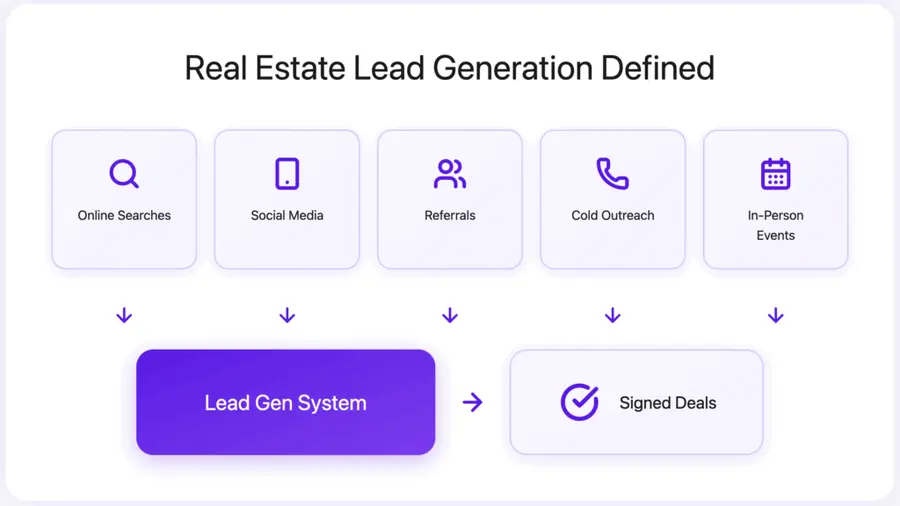
The goal isn’t just to collect names: it’s to build relationships, follow up strategically, and turn interest into signed deals.
When done right, lead generation becomes a system that keeps your pipeline full, even when the market slows down.
How to Choose the Best Lead Generation Methods for You
Not every lead gen strategy will work for every agent. And trying to do everything at once is a fast track to burnout.
Here’s how to pick the methods that match your business, personality, and market:
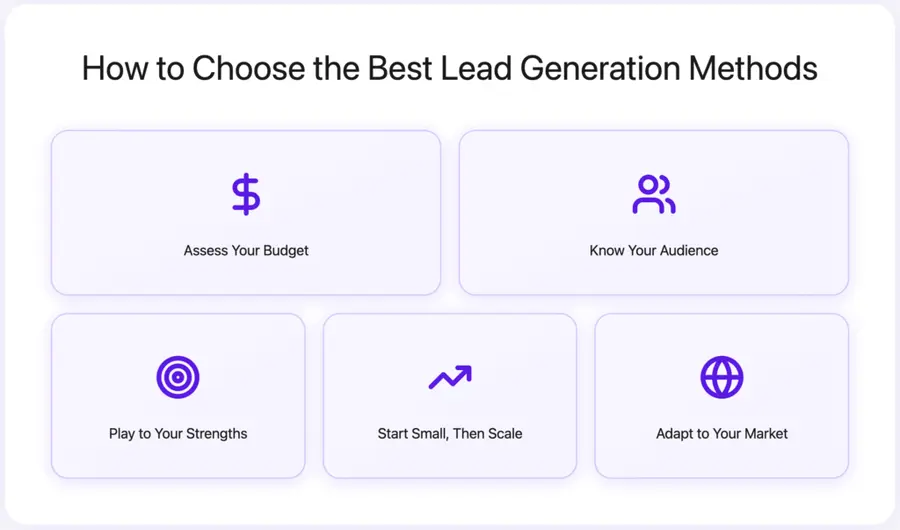
- Assess Your Budget: Paid ads can scale quickly, but organic strategies like referrals or LinkedIn outreach work just as well if you’re willing to put in the time.
- Know Your Audience: Are you targeting first-time buyers? Investors? Luxury sellers? Find out where they spend their time — and meet them there.
- Play to Your Strengths: If you’re great at face-to-face networking, lean into open houses and community events. More comfortable behind a screen? Focus on LinkedIn, SEO, or email automation.
- Start Small, Then Scale: Pick 1–2 channels, test them consistently, and double down on what works.
- Adapt to Your Market: What works in Manhattan won’t always work in a small town. Stay close to local trends and competition.
How to Implement and Optimize Your Lead Generation Efforts
Successful lead generation is an ongoing process of execution and refinement.
Here’s how to make sure yours actually delivers results:
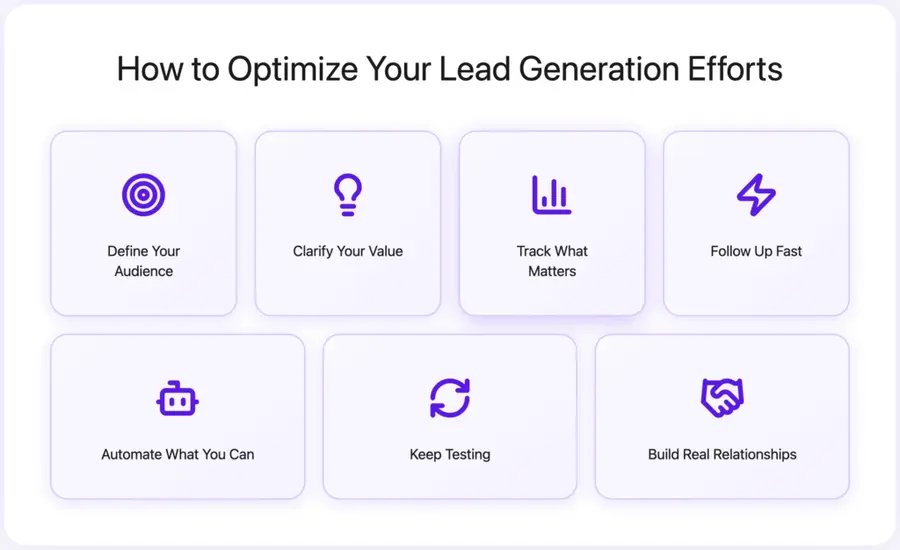
- Define Your Audience: Know exactly who you’re targeting — first-time buyers, investors, downsizers? The more specific, the better your message will land.
- Clarify Your Value: Why should someone choose you over another agent? Highlight what makes you different and how it solves their problem.
- Track What Matters: Monitor key metrics like cost per lead, conversion rate, and ROI. If you don’t measure, you can’t improve.
- Follow Up Fast (and Often): Speed matters — respond within minutes, not hours. Use email, calls, and texts to stay top-of-mind.
- Automate What You Can: Connect your CRM, email outreach tools, and social media platforms. Let tech handle the repetitive stuff so you can focus on closing.
- Keep Testing: Try different messages, channels, and offers. Stay flexible and adjust based on what actually works.
- Build Real Relationships: Don’t treat leads like numbers. Offer real value, stay helpful, and keep in touch even after the deal is done.
Conclusion
There’s no one-size-fits-all approach to real estate lead generation. But the winning formula is always the same: clear strategy, smart tools, and consistent execution.
By knowing your audience, standing out with a strong value proposition, tracking what works, and following up with purpose, you’ll build a lead pipeline that actually converts.
Keep learning, keep testing, and keep showing up. That’s how you stay ahead in a competitive market.
Ready to put these strategies into action?
Your next client could be one outreach away.
FAQs
What is a real estate lead?
A real estate lead is an individual or entity who has shown some level of interest in buying, selling, or investing in real estate.
This interest can be expressed through various actions, such as visiting your website, attending an open house, making an inquiry, or being referred by a past client.
Leads are potential clients that require further nurturing to convert into active opportunities.
What are the most effective lead generation strategies?
The most effective lead generation strategies are often a combination of digital and traditional methods, tailored to your specific market and target audience.
Generally, online presence and digital marketing (SEO, PPC, social media) and networking and referrals are highly effective due to their broad reach and high conversion rates.
Consistent follow-up and providing tangible value are critical for all strategies.
How can I generate leads with a limited budget?
Generating leads with a limited budget focuses on cost-effective, high-impact strategies. Prioritize:
• Referrals: Leverage your existing network and past clients. • Community Involvement: Volunteer or participate in local events. • Social Media Organic Reach: Create engaging content without paid ads. • Content Marketing: Write blog posts or guides that attract organic traffic. • Networking: Attend free or low-cost industry events.
How often should I follow up with leads?
The optimal follow-up frequency varies based on the lead’s engagement level and source, but consistency is paramount.
• Immediate Follow-up: For new inquiries, aim to respond within 5-15 minutes.
• Initial Phase: Follow up daily for the first 3-5 days, using various communication channels (email, phone, text).
• Nurturing Phase: If a lead is not ready to act immediately, establish a longer-term nurturing sequence, perhaps weekly, bi-weekly, or monthly, providing valuable content.
Always adjust based on the lead’s responses and expressed interest. Over-communication can be as detrimental as under-communication.
What is the difference between a lead and a prospect?
The distinction between a lead and a prospect lies in the level of qualification and demonstrated interest.
• A lead is a contact who has shown initial interest in your services. They fit a general demographic or have performed an action that suggests potential interest. They are largely unqualified.
• A prospect is a qualified lead. This means they have been assessed and meet specific criteria indicating a higher likelihood of becoming a client.


