
30-Second Summary
- Choosing a reliable B2B email list provider ensures high deliverability, compliance, and ROI—critical for scaling cold outreach or CRM enrichment.
- Evaboot — best for LinkedIn Sales Navigator users; automates lead export, email finding, and data cleaning at startup-friendly pricing.
- ZoomInfo — enterprise-grade platform with intent data, firmographics, and CRM integrations, ideal for large-scale prospecting.
- Apollo.io — combines lead database, enrichment, and automated email sequences in one tool—great all-in-one choice for SMBs.
- Focus on data accuracy, GDPR compliance, and targeted filters when evaluating providers to maximize outreach efficiency.
Building a high-quality B2B email list is one of the fastest ways to scale your outreach, fill your pipeline, and connect with decision-makers at the right time.
But buying the wrong list—or relying on outdated data—can lead to low deliverability, high bounce rates, and wasted budget.
That’s why choosing the right B2B email list provider matters.
Whether you’re launching a cold email campaign, feeding your CRM with fresh contacts, or expanding into new markets, the right provider can help you hit your targets faster.
In this guide, I’ll break down:
- Top 15 B2B Email List Providers
- What is a B2B Email List Provider?
- Why Use a B2B Email List Provider?
- How to Choose the Right B2B Email List Provider for You
Ready to find the best B2B email list provider for your sales or marketing team?
Let’s dive in.
Top 15 B2B Email List Providers
Identifying the right partners for your B2B email list needs can be daunting. We’ve compiled a list of top providers, each with unique strengths.
- Evaboot
- ZoomInfo
- Apollo.io
- Hunter.io
- Lead411
- Lusha
- Seamless.AI
- UpLead
- Adapt.io
- RocketReach
- Snov.io
- Cognism
- LeadIQ
- FindThatLead
- Skrapp.io
1. Evaboot
Evaboot is a lead extraction tool purpose-built for LinkedIn Sales Navigator users. It automates the process of finding and cleaning B2B email data from LinkedIn, helping you build highly targeted prospect lists.
Key Features:
- Export Leads: Export lists and searches from Sales Navigator to CSV.
- Email Finder: Utilize scraping and email finder algorithms to find professional emails.
- Email Verifier: Test all emails found to verify their existence.
- Clean Data: Automatically clean names, job titles, and company names.
- Filter Leads: Verify if your leads match your Sales Navigator search filters.
Pros:
- Extremely easy to use with LinkedIn Sales Navigator
- Great for personalized, ICP-focused outreach
- Affordable for startups and SMBs
Cons:
- Only works with LinkedIn-based leads
- No built-in CRM or email sequencing
Pricing: Starts at $9/month, billed annually; credits-based pricing.
2. ZoomInfo
ZoomInfo is a market leader in B2B data, offering an expansive contact and company database with advanced filtering, intent signals, and real-time enrichment.
Key Features:
- 100M+ business contacts and decision-makers
- Buyer intent data
- Technographics and firmographics
- Integrations with major CRMs (HubSpot, Salesforce)
- Chrome extension
Pros:
- Excellent global data coverage
- Robust intent and firmographic filters
- Powerful data enrichment and automation
Cons:
- Expensive, especially for small teams
- Complex pricing tied to seats and credits
Pricing: Custom pricing; generally starts around $15,000/year for small teams.
3. Apollo.io
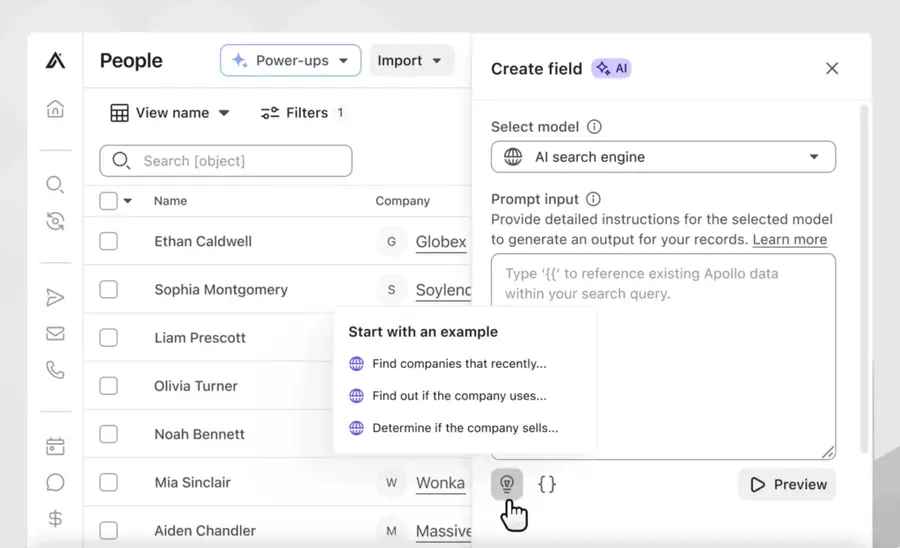
Apollo.io combines a massive B2B database with outreach automation tools, enabling users to find leads, enrich data, and launch email sequences—all in one platform.
Key Features:
- 260M+ contacts across 70M+ companies
- Email and direct dial verification
- Email sequences and automated campaigns
- LinkedIn plugin and AI-based lead scoring
Pros:
- Excellent value for all-in-one platform
- Free plan available
- Email and CRM automation features included
Cons:
- Credit system can be limiting
- Occasional data duplication in exports
Pricing: Free plan available; paid plans start at $49–$99/month per user.
4. Hunter.io
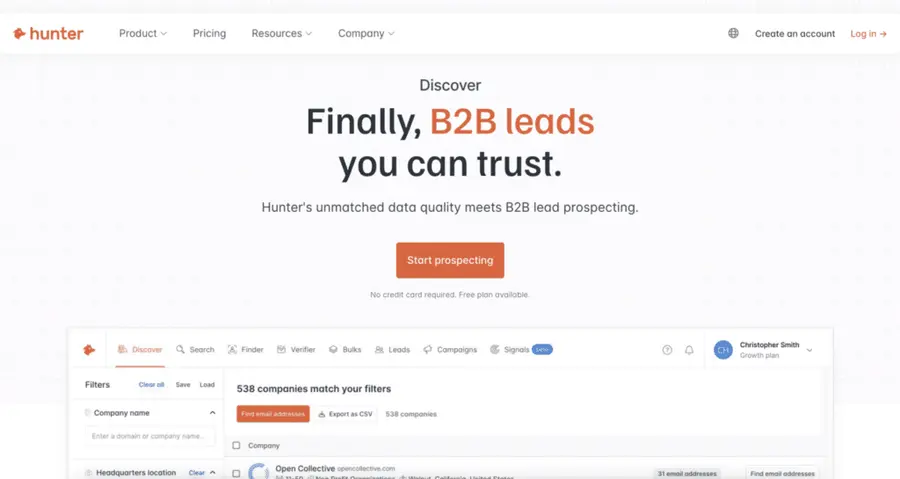
Hunter.io is one of the most well-known email finder and verifier tools. It allows users to quickly discover professional emails from domains or individual names.
Key Features:
- Domain search for email patterns
- Email verifier (single/bulk)
- Chrome extension
- Google Sheets integration
Pros:
- Very user-friendly
- High accuracy for domain-based searches
- Free plan available
Cons:
- Not ideal for building large-scale lists
- Limited enrichment capabilities
Pricing: Free for up to 25 searches/month; paid plans start at $49/month.
5. Lead411
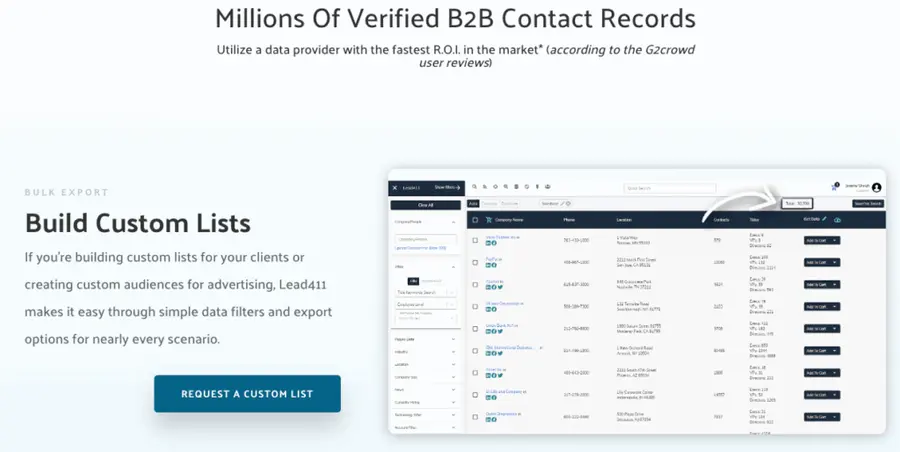
Lead411 is a robust B2B contact database and sales intelligence platform known for its real-time verified emails, intent data, and buyer signals. It’s built for teams that want accurate contact data and prospecting triggers to boost outreach effectiveness.
Key Features:
- 450M+ B2B contacts with email and mobile numbers
- Intent data powered by Bombora
- Chrome extension for LinkedIn and web sourcing
- Sales triggers (job changes, company growth, funding rounds)
- CRM integrations (Salesforce, HubSpot, Outreach)
Pros:
- Real-time verification of emails and direct dials
- Intent data helps prioritize hot leads
- Chrome extension supports fast, on-the-go prospecting
- Affordable plans for SMBs and scalable to enterprise
Cons:
- Interface feels slightly dated compared to newer tools
- Limited global coverage outside the U.S.
- Some data accuracy issues reported with smaller companies
Pricing: Starts at $99/month per user for basic plans; advanced features like intent data are available in higher tiers. Custom pricing for enterprise accounts.
6. Lusha
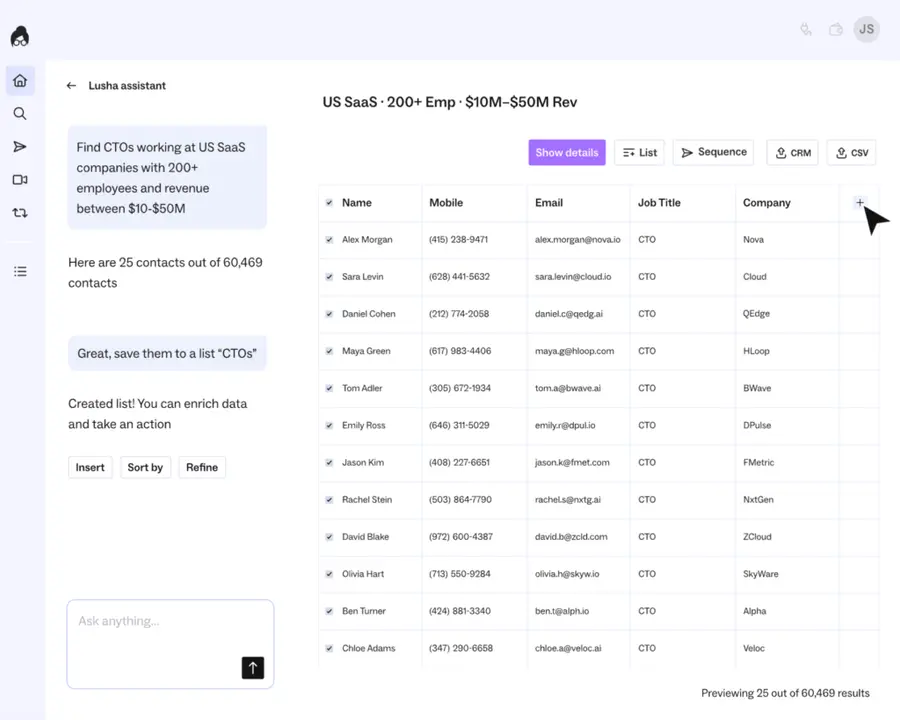
Lusha is a popular B2B data platform designed for sales professionals to find contact details directly from LinkedIn or company websites using its browser extension.
Key Features:
- Chrome extension for contact capture
- Access to phone numbers and verified emails
- 100M+ contact database
- CRM integrations (Salesforce, HubSpot)
Pros:
- Easy to use while browsing LinkedIn
- GDPR and CCPA compliant
- Strong in North American data
Cons:
- Limited credits on lower-tier plans
- Less effective for niche industries or small companies
Pricing: Free plan available with 5 credits/month; paid plans start at $29/month per user (billed annually).
7. Seamless.AI
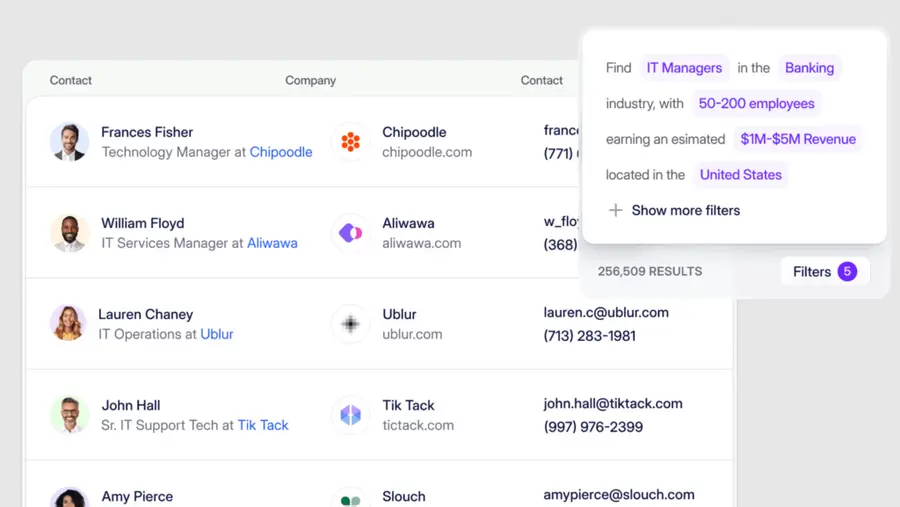
Seamless.AI is an AI-powered real-time search engine for B2B contacts. It focuses on high-accuracy email and phone discovery across industries and geographies.
Key Features:
- Real-time search for emails and direct dials
- AI-driven contact verification
- Chrome extension
- Integrates with Salesforce, HubSpot, and Outreach
Pros:
- Large global database
- Continuous enrichment and updates
- Effective for outbound prospecting
Cons:
- UI can feel cluttered for new users
- Aggressive upselling on the free tier
Pricing: Free plan available; paid plans start at around $147/month per user.
8. UpLead
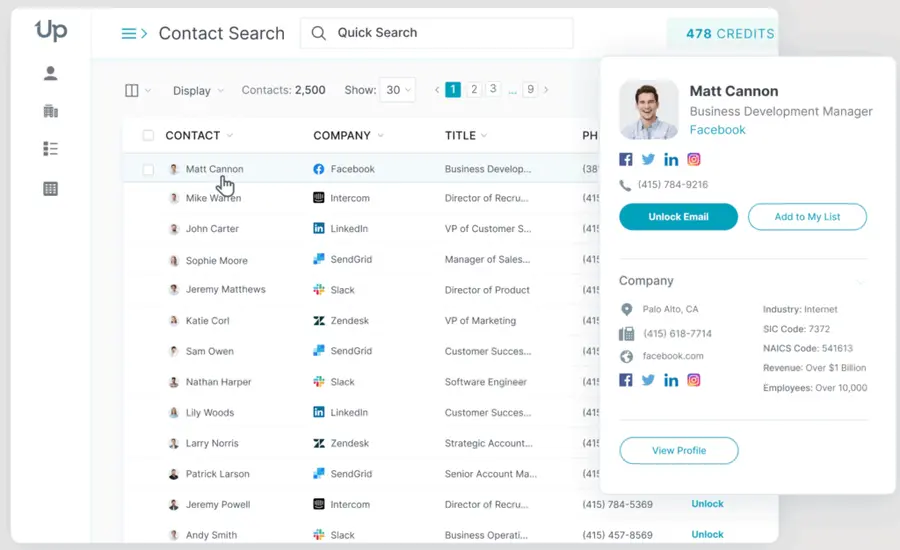
UpLead is a B2B prospecting tool with a 95% email accuracy guarantee. It emphasizes clean, verified contact data with powerful filters.
Key Features:
- 108M+ verified B2B contacts
- Technographic and firmographic filters
- Bulk list download and real-time email verification
- CRM integrations and Zapier support
Pros:
- Accuracy guarantee stands out
- Real-time verification reduces bounce rates
- Great user experience
Cons:
- Lower-tier plans are limited in features
- International coverage isn’t as strong as some competitors
Pricing: Plans start at $99/month for 170 credits; free trial includes 5 credits.
9. Adapt.io
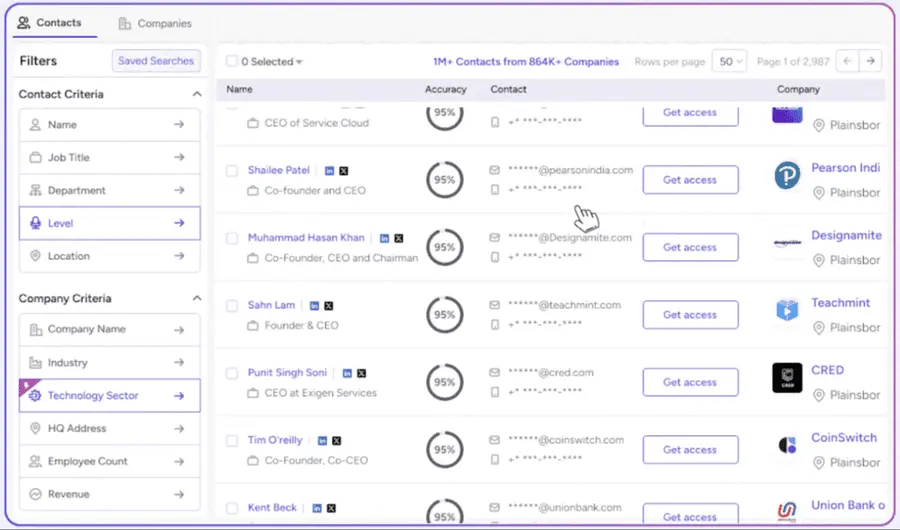
Adapt.io offers a global B2B contact database with tools for email finding, prospecting, and CRM enrichment. It’s geared toward helping sales and marketing teams scale efficiently.
Key Features:
- 100M+ B2B contacts and 20M+ companies
- Chrome extension for LinkedIn and websites
- Data enrichment for CRMs
- Integrations with Salesforce, Outreach, etc.
Pros:
- Clean, user-friendly UI
- Easy LinkedIn prospecting
- Good mid-market option
Cons:
- Less robust enrichment than Clearbit or ZoomInfo
- Fewer integrations than high-end platforms
Pricing: Free plan available; paid plans start at $39/month per user.
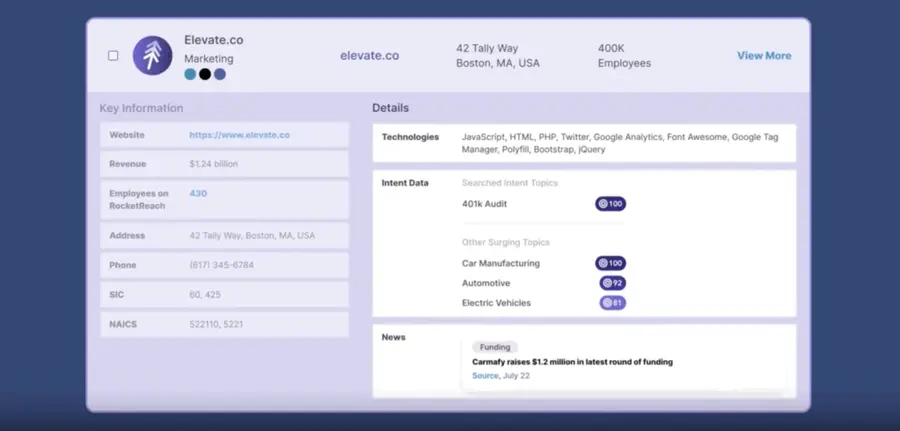
10. RocketReach
RocketReach is a trusted tool for contact lookups, ideal for individual professionals and small teams looking to find emails, phone numbers, and social profiles.
Key Features:
- Contact search by name, company, domain
- Verified emails and direct dials
- 700M+ professional profiles
- Chrome extension and API access
Pros:
- Accurate individual lookups
- Ideal for small-scale outreach
- Supports both B2B and B2C
Cons:
- Bulk list-building isn’t its strength
- Fewer outreach features than competitors like Apollo
Pricing: Essentials plan starts at $53/month; advanced plans go up to $299/month depending on features and credits.
11. Snov.io
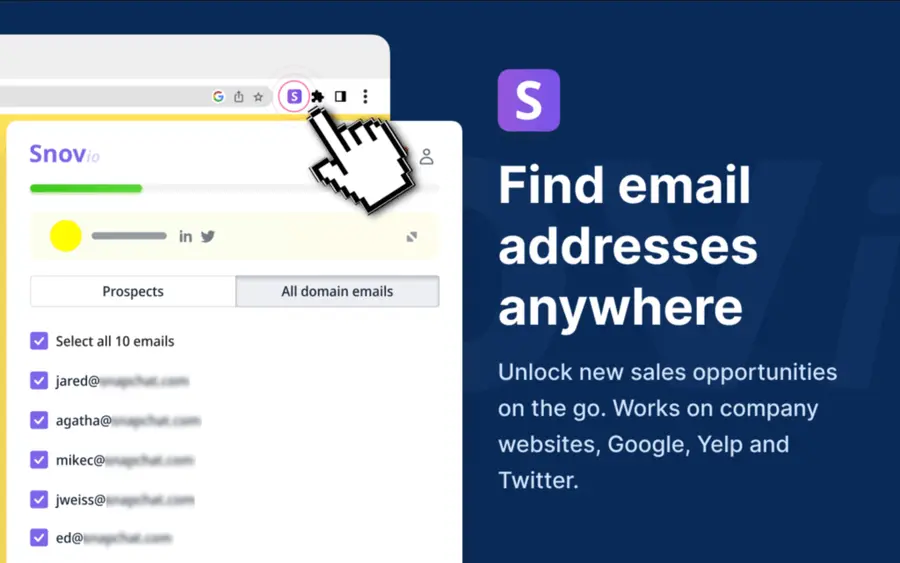
Snov.io is a flexible sales automation and lead generation platform, offering everything from email discovery to campaign management and CRM functionality—all in one place.
Key Features:
- Email finder, verifier, and drip campaign tools
- Chrome extension for LinkedIn and website sourcing
- Email tracking and scheduling
- Built-in lightweight CRM
Pros:
- All-in-one toolkit for outreach
- Competitive pricing with automation
- Helpful for startups and agencies
Cons:
- Learning curve for new users
- Smaller database than ZoomInfo or Apollo
Pricing: Free plan with 50 monthly credits; paid plans start at $39/month for 1,000 credits.
12. Cognism
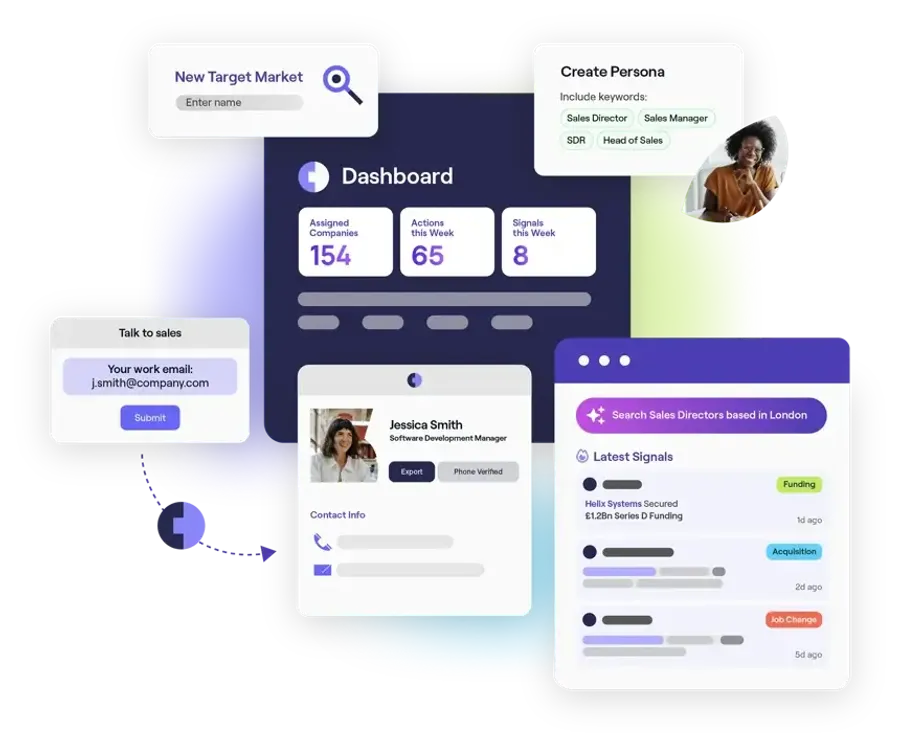
Cognism is known for delivering GDPR-compliant, phone-verified B2B contact data. It’s especially strong in the UK and EMEA regions, ideal for enterprise sales teams.
Key Features:
- Diamond Data® (phone-verified contacts)
- Intent data and technographics
- Real-time CRM enrichment
- Chrome extension for LinkedIn and Sales Navigator
- Global coverage (NAM, EMEA, APAC)
Pros:
- High-quality, compliant data
- Mobile numbers and direct dials included
- Strong customer support
Cons:
- Enterprise-level pricing
- May be overkill for small teams
Pricing: Custom pricing; typically starts at $15,000/year for access and support.
13. LeadIQ
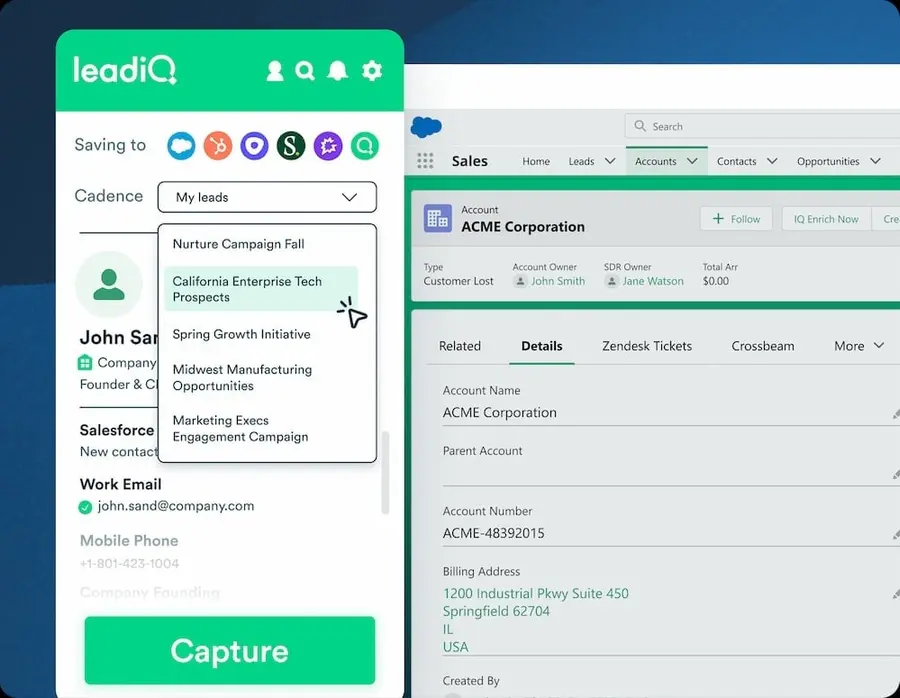
LeadIQ focuses on quick lead capture and CRM integration, helping sales reps build contact lists directly from LinkedIn with one click.
Key Features:
- Real-time email discovery
- Chrome extension for LinkedIn
- One-click export to Salesforce, Outreach, etc.
- Email tracking and cadences
Pros:
- Very fast for lead capture
- Integrates well with sales workflows
- Clean, modern UI
Cons:
- Some limits on contact data per plan
- Better suited for outbound teams than marketers
Pricing: Free plan available; paid plans start at $75/month per user.
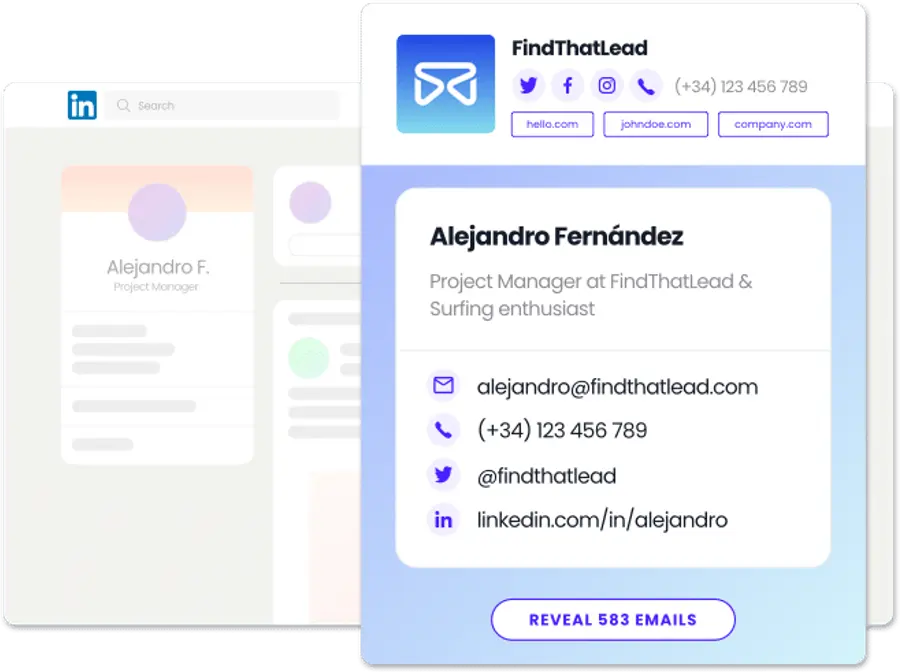
14. FindThatLead
FindThatLead is a lean B2B email prospecting tool that helps marketers and sales reps find and verify email addresses from websites and social platforms.
Key Features:
- Email finder and verifier
- Bulk domain and LinkedIn search
- Prospecting campaigns and outreach tool
- Chrome extension
Pros:
- Lightweight and beginner-friendly
- Supports multi-channel prospecting
- Budget-friendly for small teams
Cons:
- Limited firmographic data
- Smaller database vs. Apollo or UpLead
Pricing: Free plan available; paid plans start at $49/month.
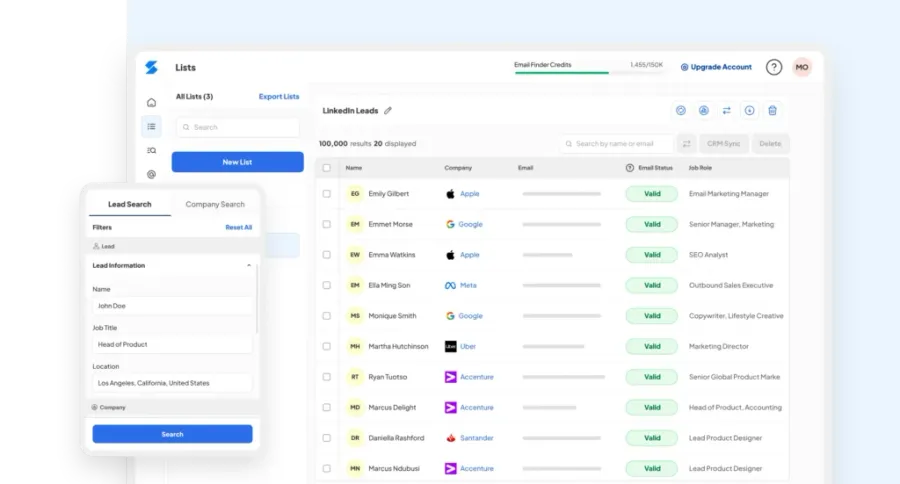
15. Skrapp.io
Skrapp.io is a LinkedIn-focused email finder and lead generation tool. It’s built for simplicity and works best for users building email lists directly from professional networks.
Key Features:
- Chrome extension for LinkedIn and websites
- Email finder by domain or name
- Basic email verification
- Bulk lead export and CSV downloads
Pros:
- Extremely easy to use
- Great for building small, targeted lists
- Affordable for freelancers and solopreneurs
Cons:
- No enrichment or advanced filters
- Not ideal for enterprise-scale prospecting
Pricing: Free plan with 150 emails/month; paid plans start at $49/month.
What is a B2B Email List Provider?
A B2B email list provider is a company that supplies businesses with databases of email addresses belonging to professionals and companies.
These lists are compiled for marketing, sales, and lead generation purposes. Essentially, they connect you with other businesses.
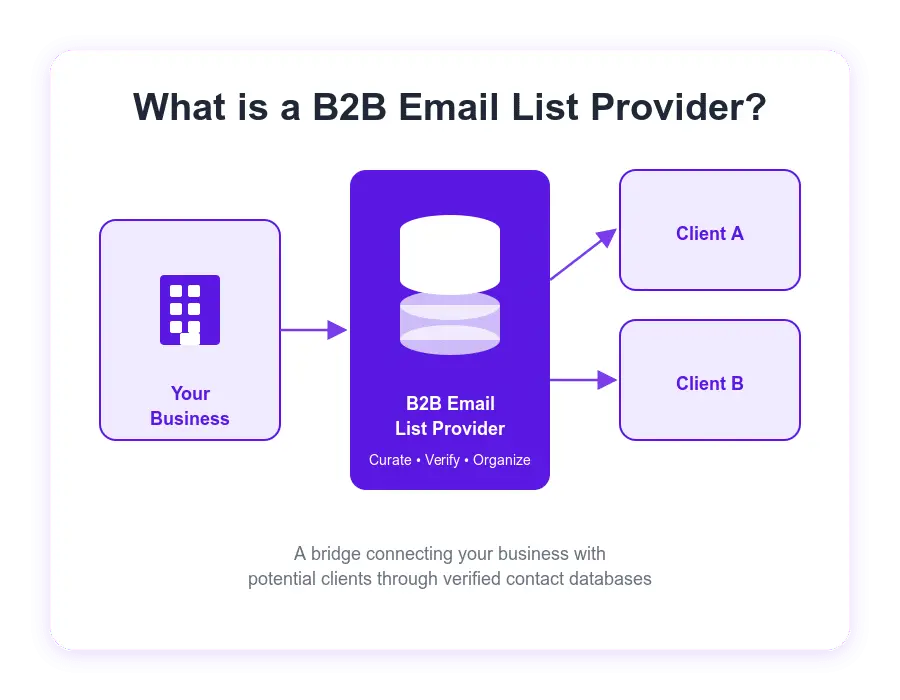
These providers curate, verify, and organize vast amounts of contact information, making it accessible to subscribers.
They serve as a bridge between your business and potential clients in the business world.
Why Use a B2B Email List Provider?
Here are the primary reasons why leveraging a B2B email list provider offers significant advantages for your outreach strategies:
1. Targeted Outreach: This means your marketing messages reach individuals most likely to be interested in your product or service, significantly improving your conversion rates.
2. Time Savings: Email providers deliver ready-to-use lists, freeing up your team to focus on core sales and marketing activities.
3. Increased ROI: When your outreach is targeted and efficient, your return on investment (ROI) naturally increases. You spend less time and resources on unqualified leads.
4. Data Accuracy: Outdated or incorrect data wastes time and damages your sender reputation. Reputable B2B email list providers prioritize data accuracy.
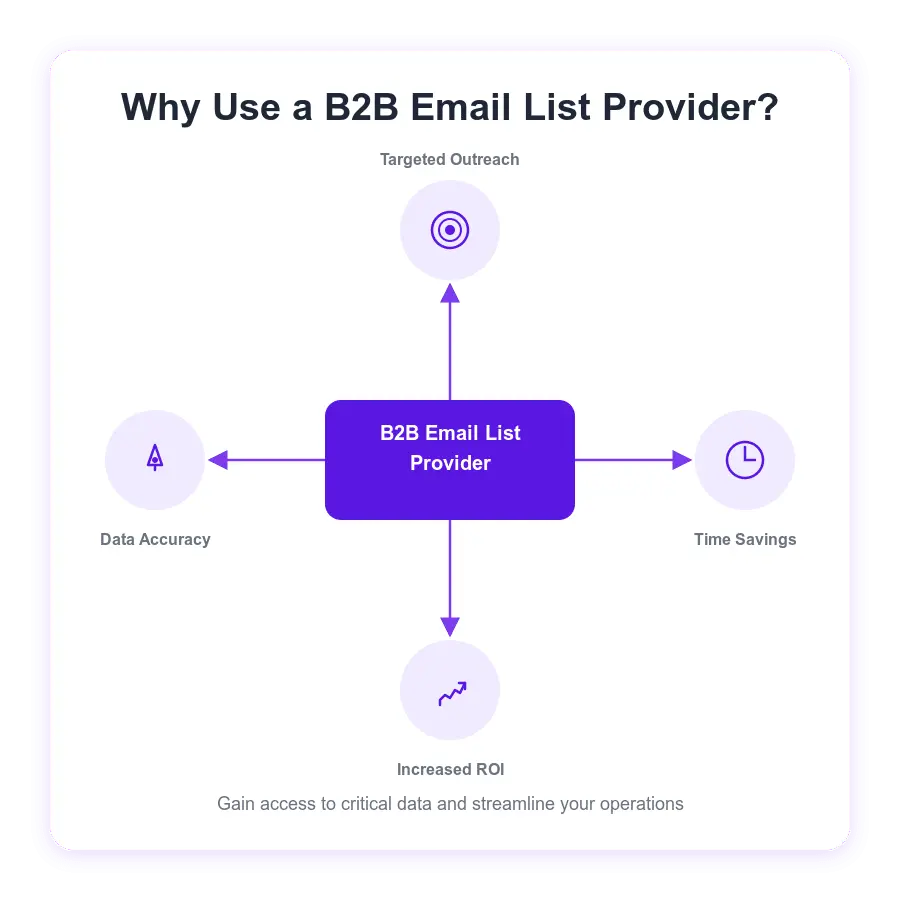
By using a B2B email list provider, you gain access to critical data and streamline your operations.
How to Choose the Right B2B Email List Provider for You
Making the final decision involves a systematic approach. Follow these steps to select the best B2B email list provider for your business:
- Define Your Target Audience
- Set Your Budget
- Evaluate Data Quality
- Check for Compliance
- Read Reviews and Testimonials
1. Define Your Target Audience
Before you even look at providers, clearly articulate who your ideal customer is.
What industries do they belong to? What job titles do you target? What company size? Where are they located?
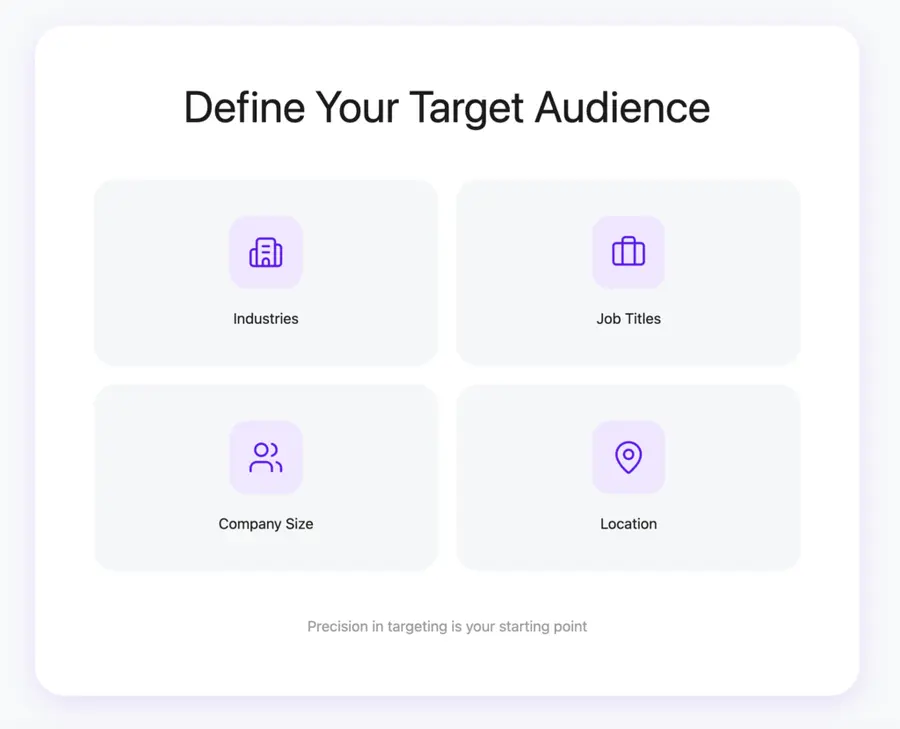
The more specific you are, the easier it will be to identify a provider that can deliver those exact leads. Precision in targeting is your starting point.
2. Set Your Budget
Understand what you’re willing to invest. Budget constraints will narrow down your options.
Be clear about whether you prefer a one-time purchase, a recurring subscription, or a credit-based system.
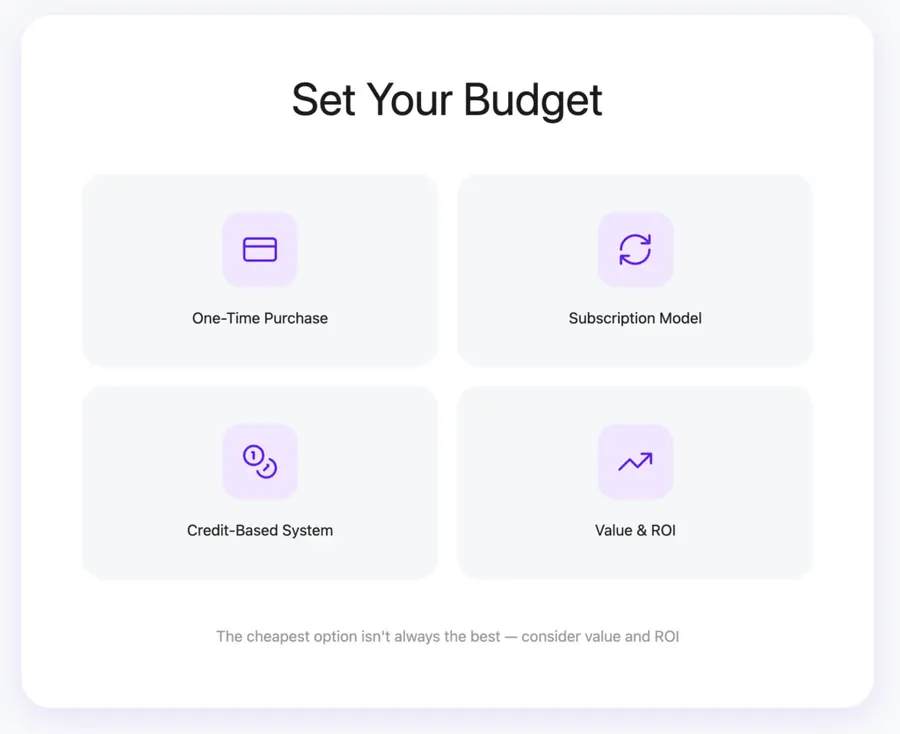
Remember that the cheapest option isn’t always the best; consider the value and ROI alongside the cost.
3. Evaluate Data Quality
This cannot be stressed enough. Request samples or conduct a trial.
Test the emails for deliverability and look for evidence of regular data updates and verification processes.
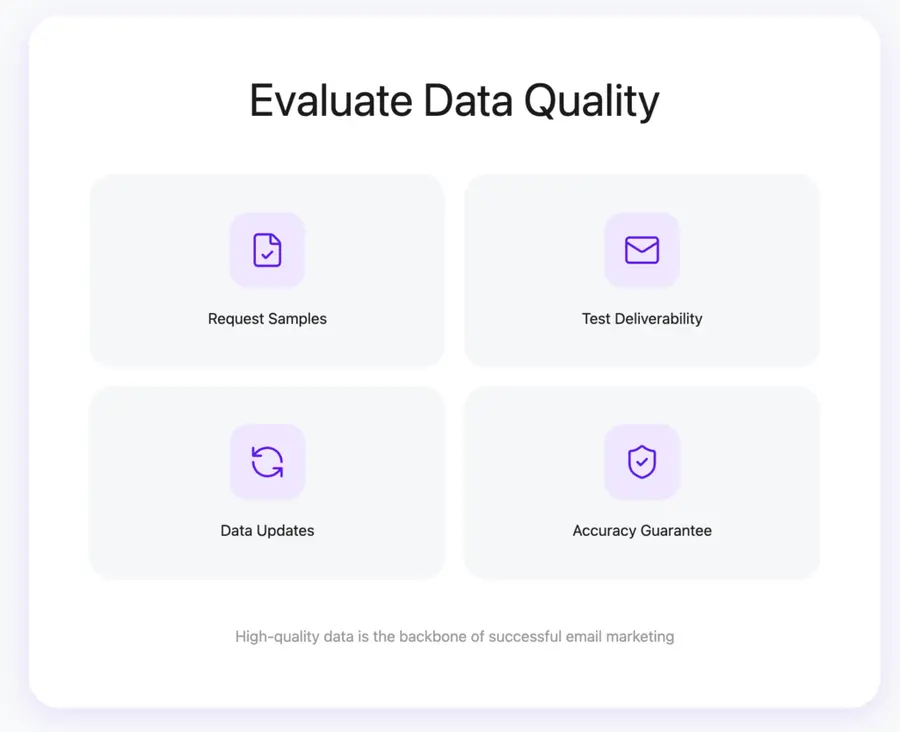
Ask about their accuracy guarantee. High-quality data is the backbone of successful email marketing.
4. Check for Compliance
Prioritize legal adherence. Confirm that the provider has robust policies in place for GDPR, CCPA, and any other relevant regional data protection laws.
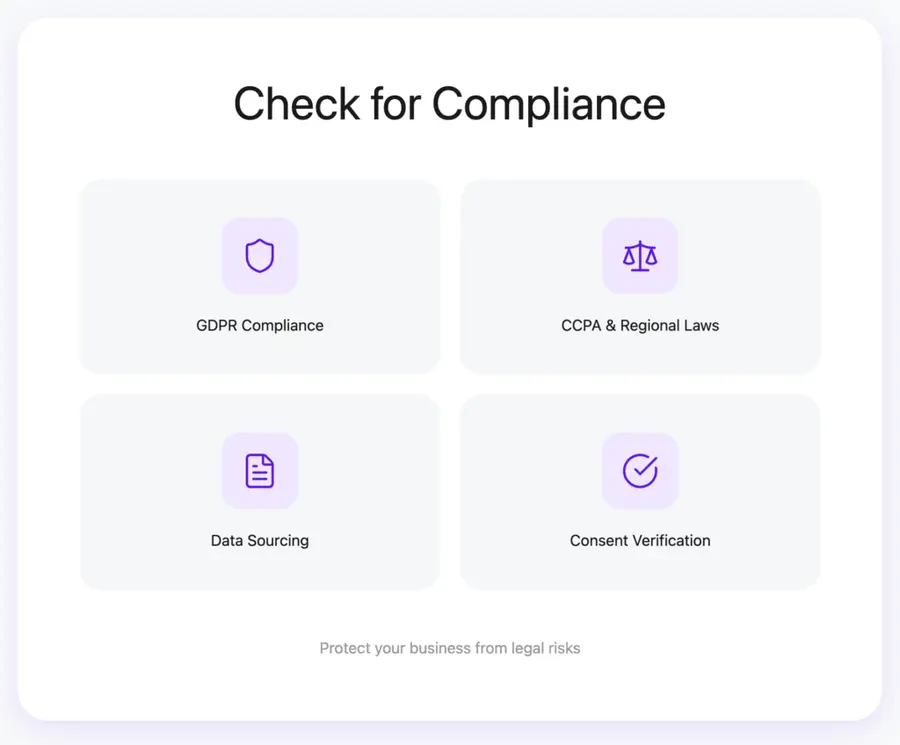
Ask how they obtain their data and if they ensure appropriate consent. Protect your business from legal risks.
5. Read Reviews and Testimonials
Don’t just take the provider’s word for it. Look for independent reviews on reputable platforms (e.g., G2, Capterra).
Pay attention to feedback regarding data quality, customer support, and ease of use. Real-world experiences offer valuable insights.
Conclusion
Choosing the right B2B email list provider is a strategic decision that directly impacts your marketing and sales success.
By focusing on data quality, targeted options, compliance, and integrating capabilities, you can empower your outreach efforts.
Define your needs, evaluate providers meticulously, and you’ll unlock a powerful channel for business growth.
FAQs
Are B2B email lists legal?
Yes, generally. However, you must ensure compliance with data privacy regulations like GDPR and CCPA.
Reputable providers will adhere to these laws and acquire data legally. Always verify their compliance measures.
How often should I update my B2B email list?
You should clean and update your list every 3 to 6 months. Data decays quickly; expect a high percentage of emails to become invalid each year.
Providers typically refresh their databases, but it’s good practice to run your lists through a verifier periodically.
Can I get a free trial from these providers?
Some top providers offer free trials or limited free versions of their services. This allows you to test their data quality and features before committing to a paid plan.
What’s the difference between a B2B and B2C email list?
B2B (business-to-business) lists contain professional contact information for individuals at companies.
B2C (business-to-consumer) lists contain personal email addresses for individual consumers.
The targeting and legal considerations differ significantly between the two.


